Skip to content
Ecological Intelligence

Ecological evidence.
Independent perspective.
Explore Wild Lands ↗

Morning Brief Global edition

October 20, 2026 · Issue 035

Today’s evidence warns against trusting familiar labels without checking the process beneath them. A Pan-Amazon review finds that measurements of wildlife loss greatly exceed direct tests of its consequences for ecosystem functions and people. In the Bering Sea, hybrid crabs expanded after a major snow-crab collapse; in England, newly planted woods hosted organisms without proving movement between older woodlands; and a Mediterranean drought study found context-dependent leaf injury. Conservation, fisheries and landscape decisions need to measure what changed, not assume a map category tells the full story.

Land Manager Watch

Evidence for decisions on land, water and habitat

Peer-reviewed · Guánica and Santa Isabel, southern Puerto Rico; commercial vegetable fields

Cover crops helped some tropical vegetable soils more quickly than others

Commercial-farm observations in Puerto Rico link rotations to soil-health changes that depend on soil texture and initial condition.

Management read

Management read: choose comparable field blocks and track particulate/oxidizable carbon, respiration, nutrient availability, infiltration and crop outcomes over multiple cycles. Soil texture and starting conditions should help decide what success looks like before expanding a rotation program across a property.

Caveat / uncertainty: These are short-term field comparisons at limited farms and soils, not proof that a named cover crop universally improves yield, soil carbon persistence or profitability. Weather, management intensity and site history may influence responses.

Read the full evidence, caveats & Land Manager analysis →

Editorial thread to watch

Three distinctions carry through the issue. Presence is not process: an animal sighting, a new woodland, a satellite green patch or a species list may be a valuable observation without proving persistence or functional connection. Validation is not implementation: flood-model scores, digital-farm metrics and blue-carbon stock calculations can obscure uncertainty and local conditions. And management is a comparison, not a slogan: coral transplant survival and Puerto Rican cover-crop responses remind us to test site, starting condition, mechanisms and who bears the consequences.

Priority Reads

The evidence that deserves a closer look.

What Pan-Amazon defaunation research still cannot tell us
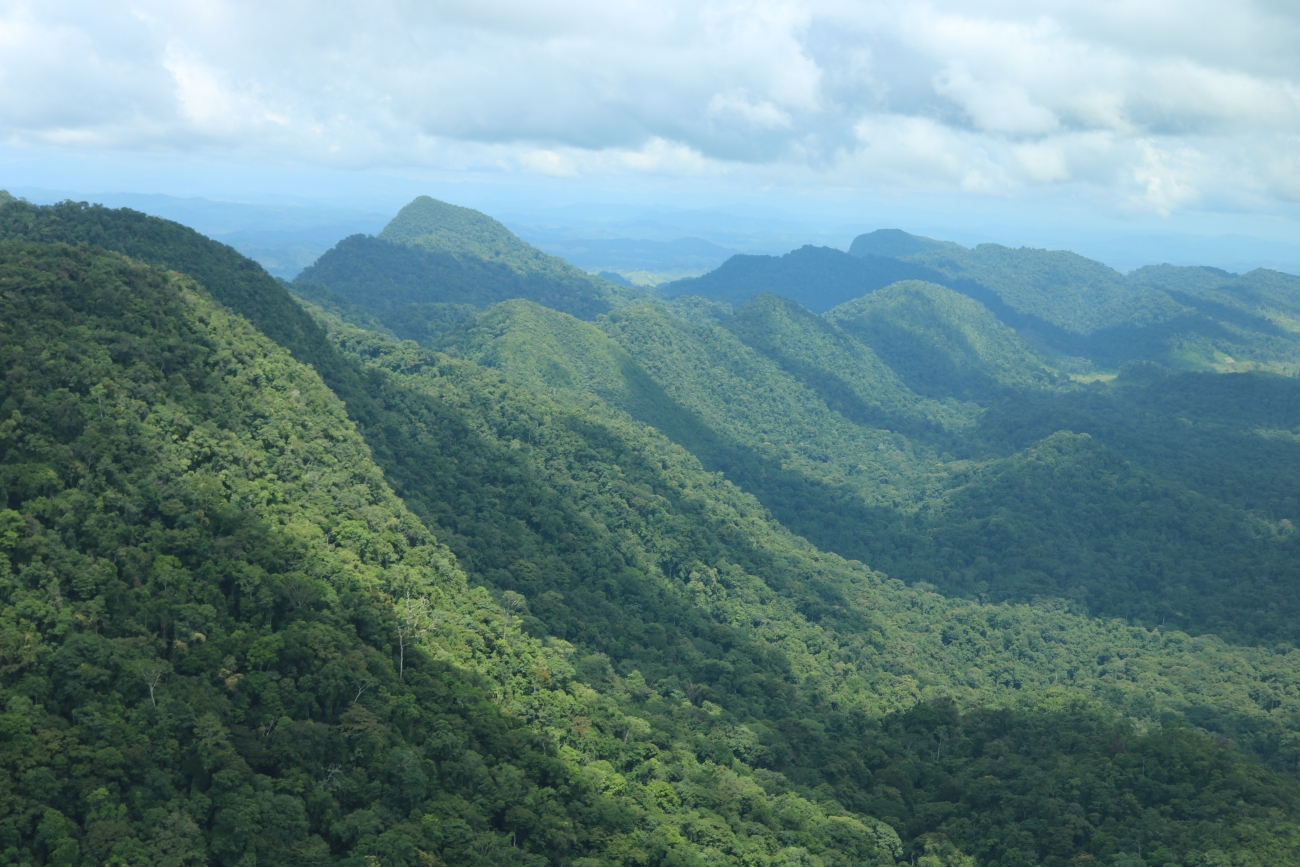
Levi Novey/USFWS. Illustrative forest landscape in Honduras and Belize; NOT a photographed location from the Pan-Amazon study. · Public domain — U.S. Fish & Wildlife Service media asset. · Rights: Public domain

What Pan-Amazon defaunation research still cannot tell us

A synthesis of 135 studies exposes a gap between evidence of wildlife loss and direct measurements of what that loss changes for people and ecosystems.

Evidence
Peer-reviewed
Geography
Pan-Amazon basin; literature concentrated in Brazil and Peru
System
Tropical forests; terrestrial and aquatic wildlife; ecosystem services

WHAT THE EVIDENCE SAYS

A review assembled 135 Pan-Amazon defaunation studies and assessed how directly they measured ecological and human consequences. Evidence concentrates on hunted or fished vertebrates and provisioning contributions; cultural dimensions, invertebrate roles and measured consequences for ecosystem functions remain much more weakly documented. The geography of the literature is uneven, especially across the basin.

WHY IT MATTERS / OUR READ

An intact-looking forest canopy cannot establish whether the animal-mediated processes on which a functioning ecosystem depends are still intact. More informative stewardship couples abundance and harvesting measures with seed dispersal, regeneration, local livelihoods and community priorities, while acknowledging what has not been studied.

CAVEATS / UNCERTAINTY

The review maps published evidence and research gaps; it is not a basin-wide field estimate of wildlife decline or a direct demonstration of a particular ecosystem-service collapse. Brazil/Peru sampling and research attention are not representative of every Amazonian community or taxon.

SOURCE

Biodiversity and Conservation · Pan-Amazon defaunation evidence synthesis
View original evidence ↗

Read the Wild Lands assessment

After the snow-crab crash, hybrid crabs surged in the Bering Sea

A long trawl series suggests that the ecological space left by collapsing snow crabs—not temperature alone—helped explain rapidly increasing hybrids.

Evidence
Peer-reviewed
Geography
Eastern Bering Sea, Alaska, United States; 1988–2025 trawl evidence
System
Marine shelf fisheries; snow crab; Tanner crab; interspecific hybrids

WHAT THE EVIDENCE SAYS

Analysis of 1988–2025 trawl records found an approximately 13.4-fold increase in snow–Tanner crab hybrid abundance relative to historical reference levels. In 2025 hybrids accounted for 41.7% of legal-sized males in a specified survey group. Structural-equation models were more consistent with an indirect response following snow-crab collapse than with a simple direct warming or changing range-overlap explanation.

WHY IT MATTERS / OUR READ

A collapse changes more than the size of one fishery stock. Species interactions, competitive release, hybrid detection and how catch and recruitment are classified can reorganize the management problem while regulations still assume familiar categories.

CAVEATS / UNCERTAINTY

Observational records and fitted causal-path models do not experimentally establish competitive release; sampling, age structure and delayed response complicate the pathway. Hybrid share refers to the specified legal-sized survey males, not all Bering Sea crabs or future catches.

SOURCE

PNAS · Bering Sea snow–Tanner crab hybrid analysis
View original evidence ↗

Read the Wild Lands assessment

Young planted woods offer habitat before they become functioning corridors

A ten-site English landscape study found use by several taxa, while evidence of movement between established woods remained much harder to establish.

Evidence
Peer-reviewed
Geography
England, United Kingdom; ten planted-woodland study landscapes
System
Temperate working-land woodland mosaics; landscape connectivity

WHAT THE EVIDENCE SAYS

Researchers compared newly planted woodlands with adjacent agricultural ground and older woodland using vegetation, invertebrate sampling, small-mammal tags and fungal indicators. Several groups used the new woodland more than farmland, but responses differed among species, and the monitoring did not establish completed movements between separated mature forest patches.

WHY IT MATTERS / OUR READ

Planting trees changes available habitat and potentially the resistance of the landscape between established woods. Calling new plantations functional wildlife corridors, however, requires direct evidence of movement, dispersal or population exchange rather than habitat occupation alone.

CAVEATS / UNCERTAINTY

Only ten sites were examined, with six paired comparisons; distances and short observation windows constrain connectivity inference. Habitat use does not equal gene flow or population-level demographic rescue, and fungal indicators do not prove dispersal pathways.

SOURCE

Landscape Ecology · planted woodland and multi-taxon connectivity study
View original evidence ↗

Read the Wild Lands assessment

Drier soils changed leaf damage, but not in one universal direction

A Mediterranean experiment and systematic synthesis show why drought effects on plants, herbivores and pathogens depend on species and defense mechanisms.

Evidence
Peer-reviewed
Geography
Cádiz, Spain; Mediterranean oak and olive vegetation
System
Mediterranean forest and agroecosystem foliage; drought disturbance

WHAT THE EVIDENCE SAYS

A focused synthesis retained ten studies from a much larger screened literature, then examined a field rainfall-reduction gradient over two years in Mediterranean woody plants. In the observed treatments lower soil moisture coincided with changed phenolic chemistry and greater leaf damage, but responses differed across species, insect herbivory and pathogenic injury.

WHY IT MATTERS / OUR READ

Drought can alter both plant stress and the food and chemical conditions encountered by consumers. Planning for forests or orchards under aridity is stronger when it measures the interacting agents of leaf injury rather than assuming every decline in moisture produces the same biotic outcome.

CAVEATS / UNCERTAINTY

The experimental sites, species and two-year study period limit geographic transferability. Some pathways are associations among moisture, chemistry and damage, not controlled demonstrations of a universal protective or harmful compound.

SOURCE

Frontiers in Plant Science · Mediterranean drought and leaf-damage synthesis
View original evidence ↗

Read the Wild Lands assessment

Global Radar

A wider field of view.

  1. A hotter reef did not consistently reward corals transplanted close to home

    An Orbicella annularis field experiment found extensive bleaching but no reliable overall home-site advantage.

    Evidence
    Peer-reviewed
    Geography
    St. Thomas, United States Virgin Islands; four reef sites
    System
    Caribbean coral reef restoration; marine heatwaves

    WHAT THE EVIDENCE SAYS

    At four St. Thomas sites researchers followed 128 reciprocally transplanted Orbicella annularis fragments during extreme 2023 marine heating above 20 degree-heating-weeks. Bleaching was widespread. Neither source population nor deployment site showed a consistent overall benefit, and much observed mortality clustered in one array.

    WHY IT MATTERS / OUR READ

    Local sourcing can matter, but its value cannot be inferred from a locality label alone. Restoration trials should separate genotype, nursery history, microhabitat and site-specific exposure while recording the distribution of failures.

    CAVEATS / UNCERTAINTY

    This was one species in one strong heat event. Mortality patterns were spatially clustered, and small subgroup differences are not proof of a general absence of local adaptation or transplantation effect.

    SOURCE

    Frontiers in Marine Science · St. Thomas coral reciprocal transplant
    View original evidence ↗

    Read the Wild Lands assessment
  2. Mercury does not stop at soil in a Brazilian savanna

    Litter and invertebrate observations suggest a pathway for mercury into food webs, without measuring a food-safety outcome.

    Evidence
    Peer-reviewed
    Geography
    Águas Emendadas Ecological Station, Cerrado, central Brazil
    System
    Tropical savanna litter, soils and invertebrate food webs

    WHAT THE EVIDENCE SAYS

    Researchers measured total mercury in surface soils, plant litter and litter-associated invertebrates in a protected Cerrado landscape. Mean measured concentrations differed across compartments, including approximately 51.7 ng/g in litter versus 34.9 ng/g in soil; higher invertebrate trophic groups tended to carry elevated concentrations in the samples.

    WHY IT MATTERS / OUR READ

    Monitoring only water or bulk soil may miss exposure pathways through the litter layer and its consumers. Biodiversity surveys and contamination screening should be designed around the actual food web and which mercury species organisms accumulate.

    CAVEATS / UNCERTAINTY

    Site-specific cross-sectional measurements cannot demonstrate population effects, contamination sources or an exposure threshold. Total mercury is not synonymous with methylmercury, and apparent trophic enrichment does not by itself prove biomagnification.

    SOURCE

    Environmental Monitoring and Assessment · Cerrado mercury food-web study
    View original evidence ↗

    Read the Wild Lands assessment
  3. Historical copepod records reveal a fragmented picture of Gulf plankton

    A century-scale catalogue assembles 107 recorded taxa, but uneven surveys prevent a simple claim about long-term change.

    Evidence
    Peer-reviewed
    Geography
    Arabian / Persian Gulf; historical pelagic surveys
    System
    Arid-subtropical marine plankton; ocean biogeography

    WHAT THE EVIDENCE SAYS

    A literature synthesis consolidated records from 82 publications spanning over a century and about 280 collection stations. The compiled checklist includes 107 reported copepod taxa in 25 families, with east–west differences in which taxa were detected.

    WHY IT MATTERS / OUR READ

    Baseline inventories are important for environmental assessments of shipping, warming and marine industrial expansion, but where and when a sample was taken matters as much as the length of the species list.

    CAVEATS / UNCERTAINTY

    Heterogeneous sampling gears, taxonomy, seasons and geographic effort make this an inventory rather than a standardized temporal trend or proof of regional extinction or redistribution.

    SOURCE

    Discover Oceans · Arabian Gulf copepod inventory
    View original evidence ↗

    Read the Wild Lands assessment
  4. A rare lemur was found where the map had not shown it

    A confirmed red ruffed lemur observation in a northeastern Madagascar reserve suggests the need for targeted surveys, not a proven population recovery.

    Evidence
    Peer-reviewed
    Geography
    Anjanaharibe-Sud Special Reserve, northeastern Madagascar
    System
    Tropical rainforest; lemur range monitoring

    WHAT THE EVIDENCE SAYS

    An opportunistic survey guided by local observations documented two visually identified red ruffed lemurs in Anjanaharibe-Sud in November 2024, with additional vocal detections. The account adds a documented locality that should inform future survey design and threat assessment.

    WHY IT MATTERS / OUR READ

    Local ecological knowledge can direct efficient verification when standard monitoring undersamples difficult terrain. A new confirmed occurrence matters for survey priorities even when it cannot justify a new estimate of range size or abundance.

    CAVEATS / UNCERTAINTY

    This was a short opportunistic search with very few confirmed animals. It cannot distinguish previously overlooked occupancy from recent movement, infer breeding, or demonstrate population growth.

    SOURCE

    International Journal of Primatology · red ruffed lemur occurrence note
    View original evidence ↗

    Read the Wild Lands assessment
  5. Most measured carbon in one Indonesian seagrass study lay beneath the plants

    Derawan surveys highlight sediment storage and an apparent stock decline, while estimated emissions depend on assumptions.

    Evidence
    Peer-reviewed
    Geography
    Derawan Islands, East Kalimantan, Indonesia
    System
    Seagrass meadows; coastal blue carbon; marine protected areas

    WHAT THE EVIDENCE SAYS

    At six monitoring stations, measured seagrass carbon-stock estimates ranged roughly 154–244 tonnes C per hectare, with approximately 99% attributed to sediment. Comparison with an earlier 2014 dataset suggested a lower mean stock by 2025; authors translated the difference into a scenario-derived carbon-dioxide-equivalent estimate.

    WHY IT MATTERS / OUR READ

    Blue-carbon accounting is largely a soil and sediment problem. Repeated cores and comparable methods, not simply maps of green seagrass cover, are necessary to judge long-term storage and whether a management intervention changed it.

    CAVEATS / UNCERTAINTY

    The roughly 36% historical difference is not an experimentally estimated cause of loss; surveys differed in context and methods. The reported annual emissions figure is calculated from stock change, not a directly measured atmosphere–ocean flux.

    SOURCE

    Discover Environment · Derawan seagrass carbon field comparison
    View original evidence ↗

    Read the Wild Lands assessment
  6. Digital agriculture scores cannot stand in for field-measured ecology

    A Chinese provincial panel associates rural digitalization with a composite green-transformation indicator, not demonstrated biodiversity gains.

    Evidence
    Peer-reviewed
    Geography
    Thirty-one Chinese provinces, 2011–2023
    System
    Cultivated lands; agricultural systems; technology policy

    WHAT THE EVIDENCE SAYS

    Researchers analyzed a 2011–2023 31-province panel using spatial econometric models. Rural digitalization indicators correlated with higher scores on the paper's composite cultivated-land green-transformation measure, including reported geographic spillovers and heterogeneous associations.

    WHY IT MATTERS / OUR READ

    The practical test is whether digital tools change nutrient losses, soil condition, water demand and farmer decisions, and at what cost—not whether a province can improve an index with a technology label.

    CAVEATS / UNCERTAINTY

    Observational model relationships, index construction and omitted policy/economic factors preclude a causal claim. Composite green indicators do not directly establish species recovery, safer water or measured farm sustainability.

    SOURCE

    Frontiers in Sustainable Food Systems · China rural digitalization panel
    View original evidence ↗

    Read the Wild Lands assessment
  7. A groundwater map becomes more useful when wells test its guesses

    A Tamil Nadu geophysical survey uses electrical resistivity and borehole checks to narrow possible groundwater targets.

    Evidence
    Peer-reviewed
    Geography
    Walajabad region, Tamil Nadu, India
    System
    Groundwater aquifers; hydrogeological mapping

    WHAT THE EVIDENCE SAYS

    Researchers collected 110 vertical electrical sounding profiles and used 40 boreholes for comparison. Interpreted aquifer thickness varied substantially, around 2.5–46 metres; the modeled-versus-observed thickness relationship was reported with R-squared around 0.885 in the local sample.

    WHY IT MATTERS / OUR READ

    Groundwater exploration is better treated as an iterative screening process: geophysics narrows candidates, then boreholes, yield tests, chemistry and local drawdown history resolve which locations can actually supply water.

    CAVEATS / UNCERTAINTY

    Electrical resistivity is influenced by sediment composition and salinity; model fit at local calibration points is not transferable proof of aquifer productivity, recharge rates or drinking-water quality.

    SOURCE

    Water Science · Walajabad electrical resistivity groundwater study
    View original evidence ↗

    Read the Wild Lands assessment
  8. High-seas treaty design also turned on who would bear information costs

    A historical institutional analysis of BBNJ negotiations explores how requirements to disclose and share data shape cooperation.

    Evidence
    Peer-reviewed
    Geography
    High seas; UN BBNJ treaty negotiation documents, 2004–2023
    System
    Marine governance; biodiversity beyond national jurisdiction

    WHAT THE EVIDENCE SAYS

    Researchers traced documents and negotiating positions concerning the new high-seas biodiversity treaty, emphasizing information and transaction costs in marine genetic-resource notification and benefit-sharing rules. The account identifies institutional tradeoffs embedded in how cooperation is expected to operate.

    WHY IT MATTERS / OUR READ

    Governance mechanisms work only if the information people must supply can be collected, verified and exchanged by institutions with adequate capacity. Agreement on rules should be distinguished from proof that those rules have delivered ecological outcomes.

    CAVEATS / UNCERTAINTY

    This is retrospective documentary and institutional interpretation of negotiations, not a measured treaty implementation evaluation or causal test of biodiversity gains. Design provisions may change in practice and require operational monitoring.

    SOURCE

    International Environmental Agreements · BBNJ information-cost analysis
    View original evidence ↗

    Read the Wild Lands assessment
  9. Two deer species shared much of a captive gut-microbiome signal

    A small zoological comparison found substantial overlap, with exploratory differences too limited to support general wildlife-health claims.

    Evidence
    Peer-reviewed
    Geography
    Yinchuan, China; captive sika and fallow deer
    System
    Captive ungulate microbiomes; veterinary and wildlife disease ecology

    WHAT THE EVIDENCE SAYS

    Researchers profiled gut bacterial communities of 22 captive sika and fallow deer. Their analyses found broad overlap rather than a strong overall species separation; several proposed functional differences were not robust after accounting for multiple tests.

    WHY IT MATTERS / OUR READ

    Species labels alone may be weak predictors of captive microbial communities. A stronger monitoring design would consider shared feed, enclosure, health and age before interpreting a difference as a species-specific disease signal.

    CAVEATS / UNCERTAINTY

    Sample size, shared zoo environment, inference from sequences and multiple comparisons limit conclusions. No demonstration of wild deer microbiomes, pathogen transmission or health impacts follows from this captive observational comparison.

    SOURCE

    AMB Express · captive deer gut microbiome comparison
    View original evidence ↗

    Read the Wild Lands assessment

Landscape / City Watch

Cities are ecological systems.

City bird-diversity gradients change with season and latitude

A 17-million-record North American citizen-science analysis shows why an urban wildlife signal depends on winter, latitude and the mix of native and introduced birds.

Evidence
Peer-reviewed
Geography
Roughly 452 North American cities and surrounding landscapes
System
Cities as habitats; bird richness; urban seasonality

WHAT THE EVIDENCE SAYS

Researchers analyzed approximately 17 million eBird observations spanning hundreds of North American cities. Winter native bird-richness gradients across latitude differed between urban and nearby nonurban landscapes; introduced birds showed weaker latitude effects, and some urban relationships changed direction under colder conditions.

WHY IT MATTERS / OUR READ

Treat a city as a seasonally shifting ecological landscape rather than a single point on a greener-is-better scale. Migratory dynamics, nonnative assemblages, heat, feeders and neighborhood vegetation can each alter what a city survey actually detects.

CAVEATS / UNCERTAINTY

eBird is opportunistically sampled, so participation and effort bias remain important. Associations do not prove urban refuges are improving population survival or that all cities share the same pattern; model and reporting choices influence city comparisons.

SOURCE

Nature Cities · North American city bird-diversity analysis
View original evidence ↗

Read the Wild Lands assessment

October 20, 2026 · Issue 035

Today’s evidence warns against trusting familiar labels without checking the process beneath them. A Pan-Amazon review finds that measurements of wildlife loss greatly exceed direct tests of its consequences for ecosystem functions and people. In the Bering Sea, hybrid crabs expanded after a major snow-crab collapse; in England, newly planted woods hosted organisms without proving movement between older woodlands; and a Mediterranean drought study found context-dependent leaf injury. Conservation, fisheries and landscape decisions need to measure what changed, not assume a map category tells the full story.

Land Manager Watch

Evidence for decisions on land, water and habitat

Peer-reviewed · Guánica and Santa Isabel, southern Puerto Rico; commercial vegetable fields

Cover crops helped some tropical vegetable soils more quickly than others

Commercial-farm observations in Puerto Rico link rotations to soil-health changes that depend on soil texture and initial condition.

Management read

Management read: choose comparable field blocks and track particulate/oxidizable carbon, respiration, nutrient availability, infiltration and crop outcomes over multiple cycles. Soil texture and starting conditions should help decide what success looks like before expanding a rotation program across a property.

Caveat / uncertainty: These are short-term field comparisons at limited farms and soils, not proof that a named cover crop universally improves yield, soil carbon persistence or profitability. Weather, management intensity and site history may influence responses.

Read the full evidence, caveats & Land Manager analysis →

Editorial thread to watch

Three distinctions carry through the issue. Presence is not process: an animal sighting, a new woodland, a satellite green patch or a species list may be a valuable observation without proving persistence or functional connection. Validation is not implementation: flood-model scores, digital-farm metrics and blue-carbon stock calculations can obscure uncertainty and local conditions. And management is a comparison, not a slogan: coral transplant survival and Puerto Rican cover-crop responses remind us to test site, starting condition, mechanisms and who bears the consequences.