Skip to content
Ecological Intelligence

Ecological evidence.
Independent perspective.
Explore Wild Lands ↗

Morning Brief Global edition

November 3, 2026 · Issue 049

Ecological outcomes are diverging from their convenient proxies. In Pennsylvania, fish responses to beaver wetlands differed by life stage, while development shifted cold-water streams toward warm-water communities. A horticultural synthesis found combined-yield advantages for intercropping, but the ratio cannot measure biodiversity on its own. Nigeria’s recovering lowland forest still lacks the composition of reference stands. And a field resistome experiment found that the season explained more than the tested warming or biocides. The common thread is measurement: the process, the scale and the comparator determine what counts as recovery.

Land Manager Watch

Evidence for decisions on land, water and habitat

Peer-reviewed · 34 organic strawberry farms and 48 plots, California Central Coast, USA

Diversified strawberry farms showed smaller nitrous-oxide pulses after irrigation

A California Central Coast farm comparison points to a measurable emissions contrast, not yet an isolated causal practice.

Management read

Record repeated nitrous-oxide fluxes around irrigation and fertility events alongside diversification and soil management; compare matched parcels rather than assume causation from farm type.

Caveat / uncertainty: Observational contrasts and pulses after a measured irrigation event do not isolate diversification effects or provide annual greenhouse-gas budgets.

Read the full evidence, caveats & Land Manager analysis →

Editorial thread to watch

Across the radar: Peruvian tree-retaining pastures combine forage and plant-community evidence; Romanian oak wood pastures do not have automatically more earthworms; Australian coastal soil spectroscopy adds chemistry to carbon accounting; chestnut disease treatment brings a phytotoxicity tradeoff; Himalayan grazing intensity leaves a measurable soil signature. Negative bat surveillance, women’s forest-learning narratives, Tierra del Fuego food-web reconstruction, unusual Japanese fish strandings and archived Swiss shrew viromes show the difference between a signal and a causal claim. Land Manager Watch examines irrigation-linked nitrous-oxide pulses in working strawberry farms, while Kuala Lumpur’s modeled heat reductions are not yet built climate performance.

Priority Reads

The evidence that deserves a closer look.

Beavers, development and trout do not share one watershed response
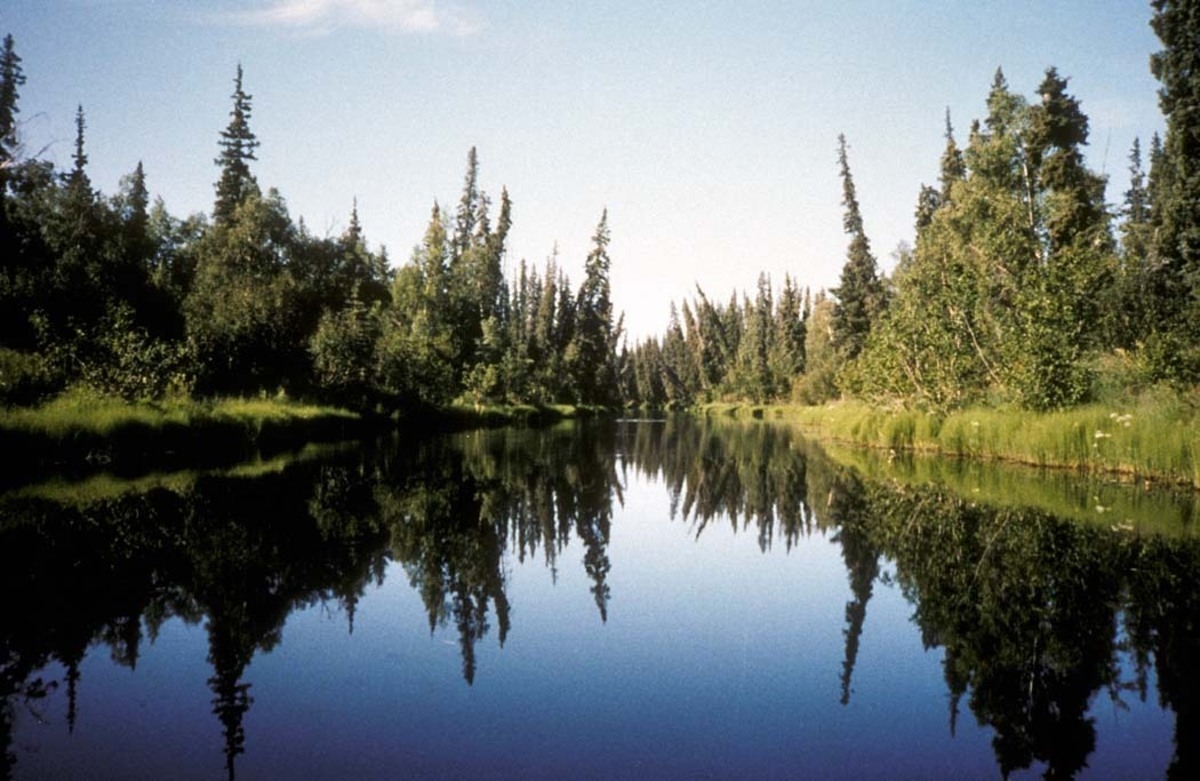
USFWS — illustrative Nowitna National Wildlife Refuge (Alaska) river landscape; NOT the Caldwell Creek (Pennsylvania) study location. · Individual FWS asset page states Media Usage Rights/License: Public Domain. · Rights: Public domain

Beavers, development and trout do not share one watershed response

A long Pennsylvania fish record found opposite associations for juvenile trout, adult trout and different land-cover drivers.

Evidence
Peer-reviewed
Geography
Caldwell Creek watershed, Pennsylvania, USA
System
Cold-water headwaters; beaver wetlands; stream fish

WHAT THE EVIDENCE SAYS

Caldwell Creek field fish surveys and GIS history linked increased development and deforestation with shifts toward warm-water fishes. Juvenile cold-water trout density was negatively associated with developed land; adult trout density was negatively associated with beaver-associated wetlands. Trout density was higher in some contemporary agricultural catchments.

WHY IT MATTERS / OUR READ

The habitat value of beaver wetlands needs species- and life-stage-specific measurement rather than an automatic benefit or harm label. Whole-watershed restoration may redistribute opportunities among fishes.

CAVEATS / UNCERTAINTY

One watershed; observational, historical and contemporary land-cover relationships cannot establish that beavers or a single land use caused the fish responses.

SOURCE

Kirk et al. · Environmental Biology of Fishes (3 Nov 2026)
View original evidence ↗

Read the Wild Lands assessment

Horticultural intercropping gained land-use efficiency across experiments

A new synthesis reports a mean land-equivalent ratio of 1.41, but crop mix and management change the advantage.

Evidence
Peer-reviewed
Geography
Global horticultural experiments
System
Horticulture; intercropping; working farms

WHAT THE EVIDENCE SAYS

A quantitative synthesis of global horticultural intercropping experiments estimated mean land equivalent ratio 1.41, with more than 90% of reported comparisons exceeding 1. Additive mixtures and nitrogen-fixing or tree-inclusive combinations were particularly productive; reported benefits were smaller where insecticides were used.

WHY IT MATTERS / OUR READ

Diverse productive landscapes can generate more combined output per unit land than monocultures, but the performance unit is combined yield, not automatically biodiversity, soil restoration or farm profitability.

CAVEATS / UNCERTAINTY

Experimental literature mixes designs and geography; land equivalent ratio is not net profit or a conservation outcome. Publication and management-selection biases remain possible.

SOURCE

Scaloppi et al. · Agronomy for Sustainable Development (3 Nov 2026)
View original evidence ↗

Read the Wild Lands assessment

Disturbed Nigerian lowland forest regained vegetation without reference structure

A Niger Delta forest inventory found more grasses and fewer trees at a historically disturbed site than in two reference forests.

Evidence
Peer-reviewed
Geography
Niger Delta lowland rainforest, Nigeria
System
Tropical lowland forest; secondary succession

WHAT THE EVIDENCE SAYS

Researchers inventoried plant communities at one historically industrially disturbed Nigerian lowland rainforest site and two nearby reference forests. The disturbed forest differed in composition, retaining relatively more grasses and fewer trees. Five recorded plants were classed as vulnerable or near threatened in the study's conservation-status review.

WHY IT MATTERS / OUR READ

Tree-cover regrowth and floristic recovery are different signals. Reference forests and threat-status inventories give a stronger restoration baseline than greenness alone.

CAVEATS / UNCERTAINTY

Only three selected sites and one disturbed site; study cannot separate historical land use from all underlying site conditions or infer regional forest recovery rates.

SOURCE

Ochekwu & Nichodemus · Discover Plants (3 Nov 2026)
View original evidence ↗

Read the Wild Lands assessment

In a soil resistance trial, seasonality outweighed experimental warming

A Spanish field experiment found time within the growing season a stronger resistance-gene signal than tested warming or crop biocides.

Evidence
Peer-reviewed
Geography
Agricultural potato field experiment, Basque Country, Spain
System
Agricultural soils; environmental antimicrobial resistance

WHAT THE EVIDENCE SAYS

A field study in agricultural potato soils combined soil warming and selected herbicide, fungicide and insecticide treatments and characterized resistance genes via targeted metagenomics. Warming and biocide treatments were not leading correlates of resistance-gene abundance changes; growing-season dynamics dominated, possibly reflecting initial manure application.

WHY IT MATTERS / OUR READ

Environmental antimicrobial resistance cannot be assessed with one sampling date and a presumed single driver. Temporal baselines can change the interpretation of climate or agricultural interventions.

CAVEATS / UNCERTAINTY

Specific site, season and tested substances; absence of a detectable effect in this experiment is not evidence that warming or biocides never affect soil resistomes. Manure explanation is plausible, not isolated experimentally.

SOURCE

Ruiz-Torrubia et al. · npj Antimicrobials and Resistance (3 Nov 2026)
View original evidence ↗

Read the Wild Lands assessment

Global Radar

A wider field of view.

  1. Young Peruvian silvopastures had richer vegetation and higher forage output

    High-Andean tree-retaining pastures differed from open grazing in soil, plant composition and dry-season productivity.

    Evidence
    Peer-reviewed
    Geography
    Amazonas highlands, Peru
    System
    Andean silvopasture; grasslands; soils

    WHAT THE EVIDENCE SAYS

    A Peru Amazonas farm chronosequence compared silvopastoral stands aged one, four and seven years with a ten-year open pasture. Silvopastoral plots generally had higher richness and pasture production, with marked soil-property contrasts; organic matter and nutrients did not increase steadily with system age.

    WHY IT MATTERS / OUR READ

    Retained trees can help reconcile forage and heterogeneous vegetation; monitoring must also catch declining soil nutrients as grazing histories lengthen.

    CAVEATS / UNCERTAINTY

    Observational single-farm comparison with no direct tree-cover quantification, differing histories and sampling; not a replicated causal trial.

    SOURCE

    Bernal et al. · Agroforestry Systems (online 3 Nov 2026)
    View original evidence ↗

    Read the Wild Lands assessment
  2. Romanian wood-pasture trees changed soil conditions more clearly than worm totals

    Earthworm abundance varied across oak-canopy distances but the overall trend was not statistically robust.

    Evidence
    Peer-reviewed
    Geography
    Traditional oak wood pastures, Transylvania, Romania
    System
    Wood pastures; soil invertebrates; agroforestry

    WHAT THE EVIDENCE SAYS

    Thirty Transylvanian wood pastures were sampled at 1, 3, 7 and 24 m from single oaks. While soil conditions and some functional-group proportions varied, total earthworm abundance was not significantly related to distance (p=0.32); several group-level patterns weakened after multiple-test correction.

    WHY IT MATTERS / OUR READ

    Soil heterogeneity beneath retained trees should not be equated with automatically more soil fauna. Functional guilds and uncertainty matter alongside totals.

    CAVEATS / UNCERTAINTY

    Observational tree-distance comparisons; study's adjusted tests limited strength of inferences about specific earthworm guilds.

    SOURCE

    Bhattarai et al. · Agroforestry Systems (online 3 Nov 2026)
    View original evidence ↗

    Read the Wild Lands assessment
  3. Coastal soil chemistry exposed differences that bulk carbon stocks conceal

    Wet mangrove and saltmarsh soils resembled each other more than supratidal paperbark soils in infrared chemistry.

    Evidence
    Peer-reviewed
    Geography
    Wilsons Promontory, Victoria, Australia
    System
    Mangrove; saltmarsh; coastal soils

    WHAT THE EVIDENCE SAYS

    At Wilsons Promontory, Victoria, researchers tested 150 depth-interval coastal soil samples from mangrove, saltmarsh and paperbark zones with wet-soil mid-infrared spectroscopy. Functional-group bands varied with depth and vegetation-hydrology zone; surface litter signals were strongest near the top.

    WHY IT MATTERS / OUR READ

    Coastal carbon monitoring can distinguish chemistry from quantity, but the choice of sampling depth and inundation zone changes the interpretation.

    CAVEATS / UNCERTAINTY

    One site with vegetation and tidal environment confounded; spectral assignments need independent biomarker or NMR validation before they are treated as mechanistic carbon-loss evidence.

    SOURCE

    Janik et al. · Journal of Soils and Sediments (3 Nov 2026)
    View original evidence ↗

    Read the Wild Lands assessment
  4. Chestnut trunk injections suppressed infection but damaged some saplings

    A two-year sapling trial revealed a treatment-dose tradeoff in protecting chestnut against Phytophthora.

    Evidence
    Peer-reviewed
    Geography
    Experimental chestnut saplings, Spain
    System
    Chestnut forest health; oomycete disease

    WHAT THE EVIDENCE SAYS

    Fifty Castanea sativa saplings were given fosetyl-Al by injection at different doses or a soil treatment, then challenged with Phytophthora cinnamomi. Injected groups showed shorter necrotic lesions and less root infection, but phytotoxic leaf injury increased with dose and two high-dose plants died.

    WHY IT MATTERS / OUR READ

    Intervention success should measure unintended tree injury alongside pathogen suppression, before moving treatments into restoration practice.

    CAVEATS / UNCERTAINTY

    Young saplings under semi-controlled challenge, not mature wild trees. Reported model-derived minimum doses are not field instructions.

    SOURCE

    Serrano-Pérez et al. · European Journal of Plant Pathology (3 Nov 2026)
    View original evidence ↗

    Read the Wild Lands assessment
  5. Himalayan alpine grazing intensity tracked sharp soil-carbon contrasts

    A single-season Indian grassland survey tested inexpensive soil measurements as disturbance classifiers.

    Evidence
    Peer-reviewed
    Geography
    Two alpine bugyal meadows, Uttarakhand, India
    System
    Himalayan rangelands; soils; remote monitoring

    WHAT THE EVIDENCE SAYS

    Researchers sampled 90 topsoils at two Uttarakhand alpine meadows across visually classified grazing gradients. Organic carbon was 5.71% versus 3.39% in least and most disturbed classes; nitrogen was lower and bulk density higher, while five-fold cross-validated Random Forest accuracy averaged 86.3%.

    WHY IT MATTERS / OUR READ

    Soil indicators may help monitor remote working grasslands when repeated vegetation surveys are difficult, but classification is not a causal test of stocking policy.

    CAVEATS / UNCERTAINTY

    Disturbance classes based partly on visible vegetation and bare ground; one pre-monsoon sampling campaign, two sites and no independent external validation.

    SOURCE

    Kumar et al. · Discover Computing (3 Nov 2026)
    View original evidence ↗

    Read the Wild Lands assessment
  6. Brazilian bat testing found no confirmed arbovirus infections in the sampled cohort

    A surveillance null result draws a line between suggestive antibody reactions and proven infection.

    Evidence
    Peer-reviewed
    Geography
    Human–bat interfaces, Midwest Brazil
    System
    Bats; arbovirus surveillance; One Health

    WHAT THE EVIDENCE SAYS

    Investigators screened tissues from 189 free-living bats sampled at human–animal interfaces in Midwest Brazil in 2017–18. All tested tissues were negative by RT-qPCR for six arboviruses; neutralization testing did not establish Oropouche or Mayaro seropositivity, although weaker Mayaro plaque reductions warrant investigation.

    WHY IT MATTERS / OUR READ

    Wildlife disease intelligence should preserve negative findings and avoid converting incomplete serological signals into transmission claims.

    CAVEATS / UNCERTAINTY

    Limited species, region, years and sample sizes. No positive results here does not rule out circulation elsewhere or at other times.

    SOURCE

    Garrido et al. · EcoHealth (2 Nov 2026)
    View original evidence ↗

    Read the Wild Lands assessment
  7. Forest-to-food learning reshaped how participants described Atlantic Forest stewardship

    Interviews in southern Brazil captured changed environmental relationships, not measured forest recovery.

    Evidence
    Peer-reviewed
    Geography
    Quarta Colônia UNESCO Geopark, Rio Grande do Sul, Brazil
    System
    Atlantic Forest; local sustainability learning

    WHAT THE EVIDENCE SAYS

    A qualitative interview study of women participating in the From Forest to Plate course in southern Brazil described increasing recognition of Atlantic Forest products, intergenerational responsibility and stewardship. Eleven purposively selected participants and associated contributors informed narrative analysis.

    WHY IT MATTERS / OUR READ

    Local ecological knowledge and livelihoods can change conservation participation, but attitude changes must not be mistaken for verified biodiversity outcomes.

    CAVEATS / UNCERTAINTY

    Small, nonrandom, self-reported qualitative sample; it cannot demonstrate broad behavior change, income effects or recovered forest condition.

    SOURCE

    Marcuzzo et al. · Discover Environment (2 Nov 2026)
    View original evidence ↗

    Read the Wild Lands assessment
  8. Tierra del Fuego food-web reconstruction highlighted coastal carrion subsidies

    An archaeological trait-based network model put guanaco and marine resources at the center of long-term trophic structure.

    Evidence
    Peer-reviewed
    Geography
    Northern Tierra del Fuego, Argentina
    System
    Coastal-steppe trophic networks; paleoecology

    WHAT THE EVIDENCE SAYS

    Using zooarchaeological information from 50 spatial-temporal contexts between the late Pleistocene and late Holocene, researchers reconstructed probabilistic predator–prey connections in Tierra del Fuego. Models assigned central roles to guanaco and coastal carrion/food subsidies as predator and human diets shifted.

    WHY IT MATTERS / OUR READ

    Terrestrial ecosystem function can depend on marine resource flows; reconstructed networks offer hypotheses for how coast and steppe were coupled over time.

    CAVEATS / UNCERTAINTY

    Archaeological sampling and reconstructed interactions are model inferences, not observed prehistoric food webs or proof of ecological stability.

    SOURCE

    Santiago et al. · Frontiers in Ecology and Evolution (2 Nov 2026)
    View original evidence ↗

    Read the Wild Lands assessment
  9. Stranded frogfish records offer a small Japanese coastal surveillance signal

    Five spring strandings establish occurrence, not a demonstrated mortality driver.

    Evidence
    Peer-reviewed
    Geography
    Pacific coast of central Honshu, Japan
    System
    Coastal fish; strandings; natural history

    WHAT THE EVIDENCE SAYS

    A brief field report identified five stranded frogfish of two Antennarius species on central Honshu's Pacific coast across spring 2025–26. Species identification relied on external morphological characters; specimens lacked advanced decomposition or obvious external injuries.

    WHY IT MATTERS / OUR READ

    Small natural-history records can guide targeted coastal surveys and specimen preservation when rare events otherwise disappear from datasets.

    CAVEATS / UNCERTAINTY

    Five specimens, nonstandard opportunistic detection, no verified cause of death or population trend; avoid inferring warming or novel range expansion.

    SOURCE

    Kambe · Discover Oceans (3 Nov 2026)
    View original evidence ↗

    Read the Wild Lands assessment
  10. Genome sequencing confirmed shrew-associated Regana virus in archived Swiss specimens

    Three historical shrew specimens yielded orthonairovirus sequences, not evidence of human infection.

    Evidence
    Peer-reviewed
    Geography
    Canton Graubünden, Switzerland
    System
    Shrew virome; archive-enabled surveillance

    WHAT THE EVIDENCE SAYS

    Researchers analyzed eight archived shrews captured in Graubünden, Switzerland in 2005–06. Regana virus RNA was found in three bicoloured shrews from two sites, and near-complete or complete genome segments were assembled from liver tissues.

    WHY IT MATTERS / OUR READ

    Museum and archived wildlife samples can change the known distribution of a virus years after collection; detection is not a spillover event.

    CAVEATS / UNCERTAINTY

    Very small historical sample; no viral isolation, transmission route, disease in shrews, or human pathogenicity established.

    SOURCE

    Park et al. · Tropical Medicine and Health (3 Nov 2026)
    View original evidence ↗

    Read the Wild Lands assessment

Landscape / City Watch

Cities are ecological systems.

Kuala Lumpur heat-model optimization is a design hypothesis, not built cooling

An urban-landscape simulation suggested different land-cover layouts could cut predicted extreme surface heat.

Evidence
Peer-reviewed
Geography
Greater Kuala Lumpur, Malaysia
System
Urban heat islands; landscape design; spatial modeling

WHAT THE EVIDENCE SAYS

Researchers optimized local-climate-zone layouts in eight Greater Kuala Lumpur districts using machine-learning surrogates and evolutionary search. Modeled surface-heat-intensity reductions averaged roughly 2.85–3.03 °C under population and GDP constraints, depending on the algorithm.

WHY IT MATTERS / OUR READ

Landscape planners can use predictive heat models to compare spatial configurations, but simulation outputs should remain hypotheses until design feasibility and measured thermal performance are tested.

CAVEATS / UNCERTAINTY

Surrogate optimization—not a built intervention, physical climate-model validation or measured air-temperature benefit; implementation costs and tradeoffs were not fully evaluated.

SOURCE

Yasser et al. · Applied Spatial Analysis and Policy (3 Nov 2026)
View original evidence ↗

Read the Wild Lands assessment

November 3, 2026 · Issue 049

Ecological outcomes are diverging from their convenient proxies. In Pennsylvania, fish responses to beaver wetlands differed by life stage, while development shifted cold-water streams toward warm-water communities. A horticultural synthesis found combined-yield advantages for intercropping, but the ratio cannot measure biodiversity on its own. Nigeria’s recovering lowland forest still lacks the composition of reference stands. And a field resistome experiment found that the season explained more than the tested warming or biocides. The common thread is measurement: the process, the scale and the comparator determine what counts as recovery.

Land Manager Watch

Evidence for decisions on land, water and habitat

Peer-reviewed · 34 organic strawberry farms and 48 plots, California Central Coast, USA

Diversified strawberry farms showed smaller nitrous-oxide pulses after irrigation

A California Central Coast farm comparison points to a measurable emissions contrast, not yet an isolated causal practice.

Management read

Record repeated nitrous-oxide fluxes around irrigation and fertility events alongside diversification and soil management; compare matched parcels rather than assume causation from farm type.

Caveat / uncertainty: Observational contrasts and pulses after a measured irrigation event do not isolate diversification effects or provide annual greenhouse-gas budgets.

Read the full evidence, caveats & Land Manager analysis →

Editorial thread to watch

Across the radar: Peruvian tree-retaining pastures combine forage and plant-community evidence; Romanian oak wood pastures do not have automatically more earthworms; Australian coastal soil spectroscopy adds chemistry to carbon accounting; chestnut disease treatment brings a phytotoxicity tradeoff; Himalayan grazing intensity leaves a measurable soil signature. Negative bat surveillance, women’s forest-learning narratives, Tierra del Fuego food-web reconstruction, unusual Japanese fish strandings and archived Swiss shrew viromes show the difference between a signal and a causal claim. Land Manager Watch examines irrigation-linked nitrous-oxide pulses in working strawberry farms, while Kuala Lumpur’s modeled heat reductions are not yet built climate performance.