Skip to content
Ecological Intelligence

Ecological evidence.
Independent perspective.
Explore Wild Lands ↗

Morning Brief Global edition

October 27, 2026 · Issue 042

A conservation boundary can be real without creating an ecological connection. A new 14-country analysis finds that alternative conservation areas often enlarge existing protected footprints but far fewer join fragmented ones. That distinction runs through today's evidence: Brazil's mining-tailings impacts changed aquatic communities in multiple directions, Southeast Asian mangrove climate potential narrows sharply when tenure and institutions are considered, and a review finds that fire-carbon science measures aboveground combustion far more often than the slower processes underneath. Ecological success is not equivalent to the number easiest to report.

Land Manager Watch

Evidence for decisions on land, water and habitat

Peer-reviewed · 122 GPS-collared wild pigs; U.S. study areas

Wild pig control can change the contacts that spread disease

A before–after control-impact study finds some removal methods alter movement and social encounters.

Management read

Management read: define the objective as epidemiological or ecological outcome, not just animals removed. For permitted professional operations, consider behavioral disturbance, contact patterns, landscape access and post-treatment surveillance when comparing removal strategies. This is not instruction to deploy poisons or lethal controls.

Caveat / uncertainty: The behavioral study did not measure an actual outbreak reduction or transmission rate. Techniques have legal, welfare, safety and local-ecology constraints; no treatment from this single study transfers automatically.

Read the full evidence, caveats & Land Manager analysis →

Editorial thread to watch

Today's editorial thread is the difference between a mapped intervention, the behavior of a system, and its measured outcome. Oceanic mantas cross marine-park edges, Canadian red squirrels respond to habitat edges as well as footprint, and the same cave-priority formula produces different rankings when geology is acknowledged. Water tracing at the Grand Canyon, reservoir sediment chemistry in South Africa and wild-boar studies expose how mechanisms can confound attractive management shortcuts. Kathmandu provides a city-scale test of hydrologic benefits versus the institutions needed to maintain them. FireSat is worth watching, but a roadmap is not yet validated monitoring capability.

Priority Reads

The evidence that deserves a closer look.

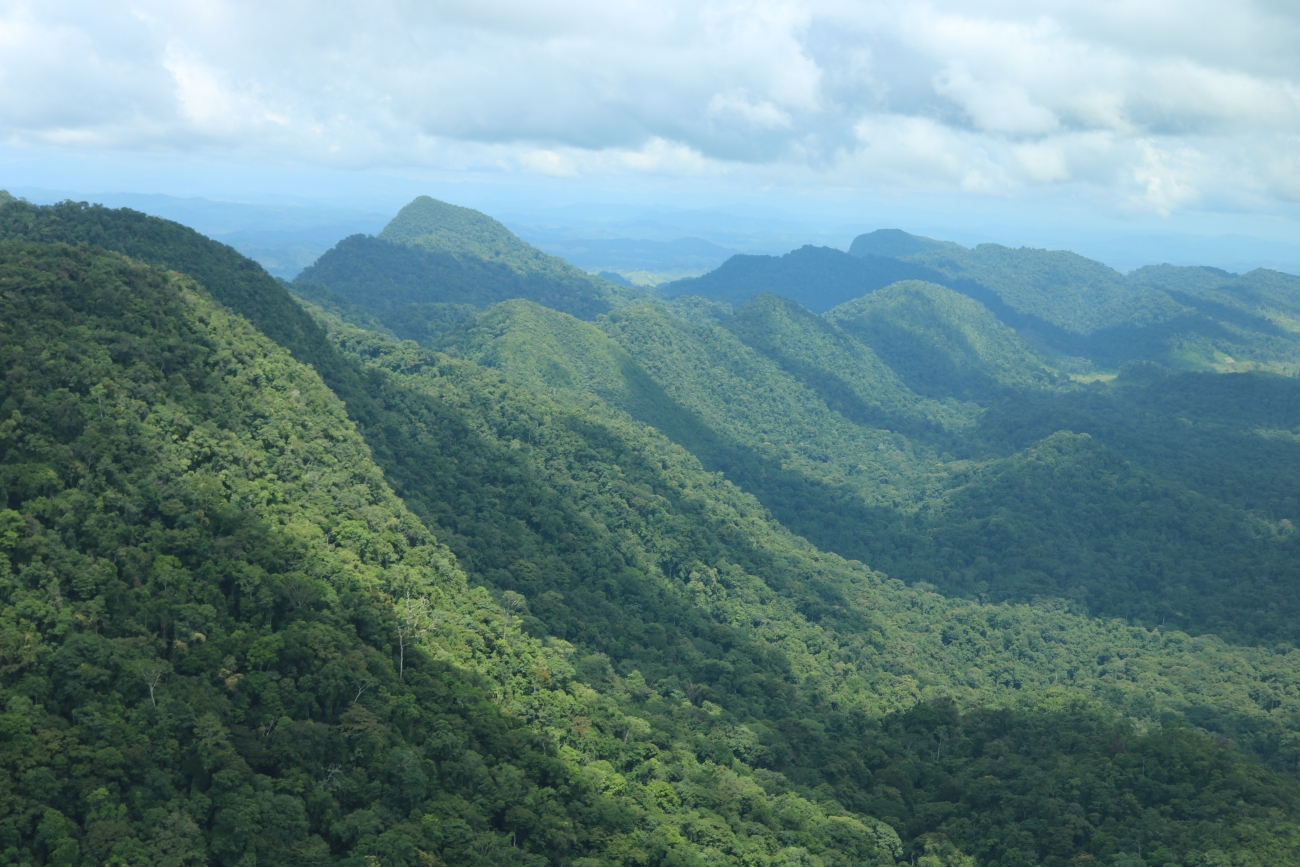
Conservation areas can enlarge a network without connecting it
Levi Novey/USFWS — illustrative tropical forest landscape; not one of the study's mapped sites · Public domain — U.S. Fish & Wildlife Service · Rights: Public domain

Conservation areas can enlarge a network without connecting it

A global audit finds many alternative conservation sites touch protected areas, but few bridge fragmented ones.

Evidence
Peer-reviewed
Geography
6,234 reported OECMs across 14 countries
System
Area-based conservation networks; protected-area configuration

WHAT THE EVIDENCE SAYS

Sharma and colleagues developed a spatial typology for other effective area-based conservation measures (OECMs), assessing whether sites enlarge, connect, buffer, or aggregate protected areas. Nearly a third of 6,234 mapped OECMs across 14 countries directly adjoined protected areas. Roughly 3% structurally connected, buffered or aggregated otherwise isolated or fragmented protected areas, while around two thirds lay within 10 km of an existing protected area.

WHY IT MATTERS / OUR READ

The first question is not how many new hectares appear in a conservation inventory, but what ecological role each hectare can actually perform. Adjacency may enlarge an existing footprint without restoring movement pathways. Map conservation additions against barriers, viable habitat and species-specific dispersal before equating area with ecological connectivity.

CAVEATS / UNCERTAINTY

The study quantifies geometric network roles, not confirmed animal movement, management quality or biodiversity outcomes; the 14-country reporting sample is not a census of all OECMs.

SOURCE

Nature Ecology & Evolution — Sharma, van der Velden & Cook (26 Oct 2026)
View original evidence ↗

Read the Wild Lands assessment

Brazil's mining disaster left more than a chemical signature

Monitoring across river and coastal food webs shows community reorganization, not a uniform biological response.

Evidence
Peer-reviewed
Geography
Rio Doce freshwater-to-marine system, Brazil
System
Mine-tailings disturbance; rivers, estuary and coastal communities

WHAT THE EVIDENCE SAYS

Researchers examined phytoplankton, zooplankton, macroinvertebrates and fishes from 62 freshwater and marine sites following the 2015 Fundão tailings-dam collapse. Taxon responses along contaminant and water-chemistry gradients revealed losses in sensitive components alongside localized increases in opportunistic organisms; threshold analysis highlighted changes in assemblages associated with altered turbidity and geochemistry.

WHY IT MATTERS / OUR READ

A monitoring program can show stable or locally rising counts while the underlying community changes. Restoration assessment should test multiple taxa and ecosystem processes across linked river and coast environments, rather than report a single recovery number or infer function from abundance alone.

CAVEATS / UNCERTAINTY

The data are monitoring-based and gradient-associated, not a controlled before-after experiment isolating each stressor; threshold values depend on habitat and community and are not universal safe limits.

SOURCE

Environmental Monitoring and Assessment — Pinha et al. (26 Oct 2026)
View original evidence ↗

Read the Wild Lands assessment

Southeast Asian mangrove carbon potential meets the limits of delivery

A new synthesis separates substantial carbon potential from much smaller feasible restoration under existing constraints.

Evidence
Peer-reviewed review
Geography
Southeast Asia, multi-country
System
Mangrove conservation; blue carbon; tenure and restoration governance

WHAT THE EVIDENCE SAYS

Friess and regional coauthors estimate that avoiding Southeast Asian mangrove loss could avert about 13.53 Tg CO2-equivalent per year and that restoration could sequester about 0.96 Tg CO2-equivalent per year. Yet their synthesis estimates social and governance constraints may limit realization of biophysically suitable restoration to 5.5–34.2%, depending on context.

WHY IT MATTERS / OUR READ

Carbon accounting is a potential, not a project pipeline. Credible conservation programs must examine local land rights, hydrologic feasibility, implementation institutions and the interaction of national greenhouse-gas inventories with commercial carbon credits before turning maps into offsets.

CAVEATS / UNCERTAINTY

Regional estimates aggregate heterogeneous countries and assumptions; emissions avoided and restoration uptake are modeled potentials, not verified delivered credits or a demonstrated community benefit.

SOURCE

Nature Reviews Earth & Environment — Friess et al. (26 Oct 2026)
View original evidence ↗

Read the Wild Lands assessment

Wildfire carbon science still measures the easiest pools

A review of 249 studies documents how geographic and measurement bias distort fire-carbon interpretation.

Evidence
Peer-reviewed review
Geography
Global terrestrial biomes; 249 studies over 15 years
System
Fire regimes; soil, vegetation and carbon cycling

WHAT THE EVIDENCE SAYS

Erdozain and colleagues extracted 17 attributes from 249 fire–carbon studies. The literature disproportionately represents temperate forests and aboveground stocks or combustion emissions, with less attention to African systems, savannas, peatlands, tundra, belowground stores, pyrogenic carbon and post-fire regrowth.

WHY IT MATTERS / OUR READ

A satellite-visible burn scar or immediate emitted-carbon estimate is only one part of a carbon trajectory. For land management, accounting must include soil pools, subsequent plant recruitment and time-dependent disturbance regimes, especially where the literature offers weak analogues.

CAVEATS / UNCERTAINTY

This is a review of study distribution and methods, not a new global causal estimate that all fire increases or decreases ecosystem carbon. Coverage biases do not themselves determine the direction of fire effects.

SOURCE

Current Forestry Reports — Erdozain et al. (27 Oct 2026)
View original evidence ↗

Read the Wild Lands assessment

Global Radar

A wider field of view.

  1. A dye tracer exposes a hidden wastewater route to a Grand Canyon spring

    Subsurface travel times put new evidence behind groundwater-connectivity concerns.

    Evidence
    Peer-reviewed
    Geography
    Grand Canyon South Rim and Monument spring, Arizona, USA
    System
    Karst and structural groundwater pathways; treated wastewater

    WHAT THE EVIDENCE SAYS

    A U.S. Geological Survey-led field investigation combined dye tracing, artificial sweeteners, PFAS and water isotopes near a decades-old treated-wastewater discharge. Dye injected into wastewater was detected at Monument spring after approximately four to six months, and remained detectable for around five months.

    WHY IT MATTERS / OUR READ

    Watershed or infrastructure boundaries drawn at the surface cannot stand in for actual groundwater pathways. The finding supports targeted source tracking and long-duration sampling rather than assuming local discharge remains local.

    CAVEATS / UNCERTAINTY

    A confirmed connection at Monument spring does not establish the same connection at other South Rim springs; tracer travel times vary with flow conditions.

    SOURCE

    Hydrogeology Journal — Beisner et al. (26 Oct 2026)
    View original evidence ↗

    Read the Wild Lands assessment
  2. More than a third of tracked oceanic manta positions were outside their park

    Mexican Pacific telemetry shows both the value and boundary limits of a no-take reserve.

    Evidence
    Peer-reviewed
    Geography
    Revillagigedo National Park and adjacent Mexican Pacific
    System
    Pelagic manta movement; marine protected areas and fishing overlap

    WHAT THE EVIDENCE SAYS

    Cabral and colleagues tracked 12 Mobula birostris tagged in the Revillagigedo region between 2017 and 2024. Over a third of estimated locations lay outside the park; seasonal modeled occurrence extended toward the Gulf of California and overlapped high industrial tuna-fishing effort near reserve boundaries.

    WHY IT MATTERS / OUR READ

    An MPA can protect a core habitat while mobile animals still use risky waters around it. Paired telemetry and fisheries-effort data provide a more useful planning basis for buffers and regional coordination than static protected-area area alone.

    CAVEATS / UNCERTAINTY

    Small tracking sample, model extrapolation and effort overlap do not directly demonstrate bycatch or a population trend.

    SOURCE

    Marine Biology — Cabral et al. (26 Oct 2026)
    View original evidence ↗

    Read the Wild Lands assessment
  3. Brazilian cave rankings change when rock type is counted

    A priority index that pools different cave lithologies can undervalue important habitats.

    Evidence
    Peer-reviewed
    Geography
    48 quartzite and granitoid caves, Minas Gerais, Brazil
    System
    Cave biota; limestone bias in biodiversity prioritization

    WHAT THE EVIDENCE SAYS

    A conservation-priority assessment of 14 granitoid and 34 quartzite caves found that when cave types were ranked together, ten of fourteen granitoid caves dropped into lower priority categories than in lithology-specific analysis. Six quartzite caves also shifted category.

    WHY IT MATTERS / OUR READ

    A scoring system can look objective while its baseline quietly favors the best-studied geology. Stratify by habitat-generating processes before using relative indices to allocate irreversible conservation decisions.

    CAVEATS / UNCERTAINTY

    Rank shifts reflect this particular index, cave sample and available biological inventories; they are not direct evidence that each reclassified site will have a different restoration outcome.

    SOURCE

    Biodiversity and Conservation — Iniesta et al. (26 Oct 2026)
    View original evidence ↗

    Read the Wild Lands assessment
  4. European migratory-bird harvest needs a population-level risk test

    Researchers propose separating ecological harvest assessment from policy choice for declining populations.

    Evidence
    Peer-reviewed
    Geography
    European Union; migratory birds with insecure conservation status
    System
    Migratory bird populations; harvest sustainability

    WHAT THE EVIDENCE SAYS

    Cruz-Flores and coauthors assess how the sustainability of migratory-bird harvest for populations with insecure conservation status can be evaluated in relation to Birds Directive obligations. Their framework identifies species and populations most likely to warrant closer harvest-management attention.

    WHY IT MATTERS / OUR READ

    A legal permission to hunt is not an ecological demonstration that harvest is sustainable. Species- and population-specific demographic evidence should anchor any policy discussion; separate scientific uncertainty from stakeholder judgments.

    CAVEATS / UNCERTAINTY

    Risk prioritization and model assumptions do not automatically establish illegal practice or the actual consequences of any specific harvest change.

    SOURCE

    Journal of Applied Ecology — Cruz-Flores et al. (26 Oct 2026)
    View original evidence ↗

    Read the Wild Lands assessment
  5. Boreal red squirrels respond differently to industrial footprint and its edges

    Hundreds of camera traps show habitat configuration can matter even when total cleared area seems limited.

    Evidence
    Peer-reviewed
    Geography
    Ten western Canadian boreal landscapes, Alberta
    System
    Industrial forest edge; red squirrel landscape occurrence

    WHAT THE EVIDENCE SAYS

    Brushett and coauthors used 430 camera traps across ten western Canadian boreal landscape units. Squirrel occurrence was positively associated with cumulative footprint in one component of their model, but decreased with edge density, especially where industrial disturbance was greatest.

    WHY IT MATTERS / OUR READ

    A hectare-offset approach misses the configuration created by seismic lines, roads and cutblocks. The same total footprint can produce very different predator access and fragmentation contexts.

    CAVEATS / UNCERTAINTY

    These are associations for red squirrels, not a universal response by all boreal wildlife; inferred predation mechanism was not experimentally tested.

    SOURCE

    Journal of Applied Ecology — Brushett et al. (23 Oct 2026)
    View original evidence ↗

    Read the Wild Lands assessment
  6. Crop damage requires two models, not one map of where wild boar go

    A French two-stage study distinguishes animal visitation from damage once a field is visited.

    Evidence
    Peer-reviewed
    Geography
    Agricultural parcels, France
    System
    Wild-boar crop use and agricultural damage risk

    WHAT THE EVIDENCE SAYS

    Chassagneux and colleagues separated parcel selection by wild boar from conditional crop-damage occurrence. Maize and legumes could be highly vulnerable to damage despite relatively low use intensity; meadows ranked low in both measures, while forest-edge proximity often increased use and damage.

    WHY IT MATTERS / OUR READ

    Prediction and mitigation should distinguish presence, exposure and consequence; counting animals on a property cannot by itself explain economic loss.

    CAVEATS / UNCERTAINTY

    Patterns are derived from a particular crop landscape and validation sample, and proposed transfer to other regions/species requires fresh tests.

    SOURCE

    Journal of Applied Ecology — Chassagneux et al. (23 Oct 2026)
    View original evidence ↗

    Read the Wild Lands assessment
  7. Livestock–wildlife coexistence needs institutional as well as ecological design

    An East African-led review proposes a joint systems framework, not a tested management cure.

    Evidence
    Peer-reviewed review
    Geography
    Global rangeland synthesis with East African research leadership
    System
    Rangelands; livestock and wild herbivore coexistence

    WHAT THE EVIDENCE SAYS

    Mramba, Kisanga and Kabuni synthesize literature on livestock production, wild herbivores, ecosystems and institutions. They propose Functional Systems Integration to connect spatial planning, governance and ecological processes that are often managed separately.

    WHY IT MATTERS / OUR READ

    A grazing arrangement will not succeed on forage ecology alone when access rules, mobility and livelihood incentives work against it. The proposed framework gives planners hypotheses to test in shared-use landscapes.

    CAVEATS / UNCERTAINTY

    Authors explicitly describe their model as conceptual and unvalidated in contrasting field contexts. Do not claim it has delivered measured conservation outcomes.

    SOURCE

    Discover Conservation — Mramba et al. (26 Oct 2026)
    View original evidence ↗

    Read the Wild Lands assessment
  8. Loggerhead shell anomalies reflect both parental lineages and incubation

    A Japanese captive-breeding dataset cautions against reading every scute difference as environmental injury.

    Evidence
    Peer-reviewed
    Geography
    Captive-bred Caretta caretta hatchlings, Japan
    System
    Sea turtle developmental morphology and reproduction

    WHAT THE EVIDENCE SAYS

    Sakaoka and colleagues analyzed loggerhead hatchlings of known parentage using genetic assignments and incubation duration. Both maternal/paternal lineage and incubation history were associated with scute-count variation, challenging simple attribution of anomalous scutes to incubation conditions alone.

    WHY IT MATTERS / OUR READ

    Wildlife monitoring indicators need causal specificity: an anatomical irregularity can have more than one generating mechanism. Hatchling health assessments should not turn a single morphological sign into a climate-impact proxy without additional evidence.

    CAVEATS / UNCERTAINTY

    The hatchlings were captive-bred; incubation duration is an imperfect temperature proxy and anatomical variation is not itself proof of fitness loss.

    SOURCE

    BMC Ecology and Evolution — Sakaoka et al. (26 Oct 2026)
    View original evidence ↗

    Read the Wild Lands assessment
  9. Soil fungi's ecological strategies shape how they handle farm carbon

    Trait-based analysis points beyond a simple tally of soil fungi for predicting soil-carbon cycling.

    Evidence
    Peer-reviewed
    Geography
    Agricultural soils investigated in a fungal-traits study
    System
    Fungal community strategies; soil organic carbon

    WHAT THE EVIDENCE SAYS

    Zou and colleagues examined how contrasting fungal ecological strategies relate to soil-carbon dynamics in agroecosystems. They report that functional strategies and microbial traits improve the mechanistic interpretation of fertility and carbon outcomes compared with undifferentiated community descriptors.

    WHY IT MATTERS / OUR READ

    A soil biodiversity result should specify which organisms and ecological functions are changing. Management claims about microbial inputs need outcomes such as decomposition, respiration and retained carbon, not taxonomy alone.

    CAVEATS / UNCERTAINTY

    The abstract does not establish a universally transferable treatment prescription or field-scale carbon gain from inoculation.

    SOURCE

    Journal of Applied Ecology — Zou et al. (24 Oct 2026)
    View original evidence ↗

    Read the Wild Lands assessment
  10. A reef-edge moray eel breeding ground has a surprisingly complex social system

    Two years of diving observations capture polygamy, lunar timing and repeated use of spawning territory.

    Evidence
    Peer-reviewed
    Geography
    Kagoshima reef-edge habitat, southern Japan
    System
    Moray eel reproduction; reef spawning ecology

    WHAT THE EVIDENCE SAYS

    Oyama and colleagues documented 168 spawning events of Gymnothorax eurostus across two breeding seasons. Individuals spawned in pairs after sunset, often around new and full moons; both sexes used multiple mates, with male territory visits and occasional sneaking tactics.

    WHY IT MATTERS / OUR READ

    Reef-edge habitats do more than support feeding fish; small spatial patches can anchor repeatable reproductive behavior. That offers testable questions for timing and siting coastal disturbance management.

    CAVEATS / UNCERTAINTY

    The detailed record covers one species at one study reef across two seasons, not all morays or all reefs.

    SOURCE

    Marine Biology — Oyama et al. (26 Oct 2026)
    View original evidence ↗

    Read the Wild Lands assessment

Landscape / City Watch

Cities are ecological systems.

Kathmandu's green-water infrastructure faces a maintenance test

A new mixed-method study links hydrologic benefits to the institutions capable of sustaining them.

Evidence
Peer-reviewed
Geography
Kathmandu Valley and Bagmati River corridor, Nepal
System
Urban stormwater, heat and green infrastructure

WHAT THE EVIDENCE SAYS

Dhakal and colleagues combine GIS, hydrologic modeling, field assessment and stakeholder evaluation of Kathmandu green infrastructure. The paper reports intervention-associated or modeled runoff reductions up to 40%, nutrient-load reductions over 60%, and local temperature differences of 3–4 °C; it identifies river corridors and low-lying zones as priorities.

WHY IT MATTERS / OUR READ

Green infrastructure changes water and heat pathways only if it is fitted to drainage, flood exposure and land management. Institutional coordination and funded maintenance, which stakeholders identified as constraints, belong in performance design from the outset.

CAVEATS / UNCERTAINTY

Reported maxima come from the study's combined models and assessments, not proof of equal realized benefit citywide; an accepted peer-reviewed version is subject to final editorial changes.

SOURCE

Scientific Reports — Dhakal et al. (26 Oct 2026)
View original evidence ↗

Read the Wild Lands assessment

October 27, 2026 · Issue 042

A conservation boundary can be real without creating an ecological connection. A new 14-country analysis finds that alternative conservation areas often enlarge existing protected footprints but far fewer join fragmented ones. That distinction runs through today's evidence: Brazil's mining-tailings impacts changed aquatic communities in multiple directions, Southeast Asian mangrove climate potential narrows sharply when tenure and institutions are considered, and a review finds that fire-carbon science measures aboveground combustion far more often than the slower processes underneath. Ecological success is not equivalent to the number easiest to report.

Land Manager Watch

Evidence for decisions on land, water and habitat

Peer-reviewed · 122 GPS-collared wild pigs; U.S. study areas

Wild pig control can change the contacts that spread disease

A before–after control-impact study finds some removal methods alter movement and social encounters.

Management read

Management read: define the objective as epidemiological or ecological outcome, not just animals removed. For permitted professional operations, consider behavioral disturbance, contact patterns, landscape access and post-treatment surveillance when comparing removal strategies. This is not instruction to deploy poisons or lethal controls.

Caveat / uncertainty: The behavioral study did not measure an actual outbreak reduction or transmission rate. Techniques have legal, welfare, safety and local-ecology constraints; no treatment from this single study transfers automatically.

Read the full evidence, caveats & Land Manager analysis →

Editorial thread to watch

Today's editorial thread is the difference between a mapped intervention, the behavior of a system, and its measured outcome. Oceanic mantas cross marine-park edges, Canadian red squirrels respond to habitat edges as well as footprint, and the same cave-priority formula produces different rankings when geology is acknowledged. Water tracing at the Grand Canyon, reservoir sediment chemistry in South Africa and wild-boar studies expose how mechanisms can confound attractive management shortcuts. Kathmandu provides a city-scale test of hydrologic benefits versus the institutions needed to maintain them. FireSat is worth watching, but a roadmap is not yet validated monitoring capability.