Skip to content
Ecological Intelligence

Ecological evidence.
Independent perspective.
Explore Wild Lands ↗

Morning Brief Global edition

November 1, 2026 · Issue 047

The recurring lesson today is that averages and footprints can hide essential mechanisms. Nitrogen enrichment increased fixing-plant biomass on average, yet responses diverged sharply by species and experiment. A national wind-energy synthesis reconstructed millions of bat fatalities beyond the turbine pad. Post-fire forest recovery depended on whether researchers measured recruitment, survival or growth, while geography and ancestry explained bat viromes better than feeding category. These results point to a common editorial question: what, precisely, was measured?

Land Manager Watch

Evidence for decisions on land, water and habitat

Peer-reviewed · Four Rhode Island restoration projects monitored up to eight years

Raising marsh elevation worked faster than rebuilding sparrow habitat

Across four Rhode Island marsh-restoration sites, sediment placement raised elevation while vegetation and wildlife recovered unevenly.

Management read

Management read: measure drainage, salinity, plant community structure, nest placement and bird responses separately across multiple breeding seasons. Sediment addition starts a restoration trajectory rather than finishing one.

Caveat / uncertainty: Modeled 24–111 years of extra marsh lifespan is a projection, not observed endurance. Nesting alone does not prove reproductive success, and Rhode Island outcomes may not transfer across coasts.

Read the full evidence, caveats & Land Manager analysis →

Editorial thread to watch

The rest of the evidence follows that thread. Groundwater complicates coastal carbon budgets; satellite water-quality accuracy may not travel between regions; restoring digging mammals did not yet produce a detectable soil-fungal response. In Rhode Island, marsh elevation rose before high-marsh vegetation and nesting structure reliably returned. These distinctions separate an intervention, an indicator and the ecological function we actually hope to recover.

Priority Reads

The evidence that deserves a closer look.

Nitrogen's benefit to nitrogen-fixing plants depends on which plants
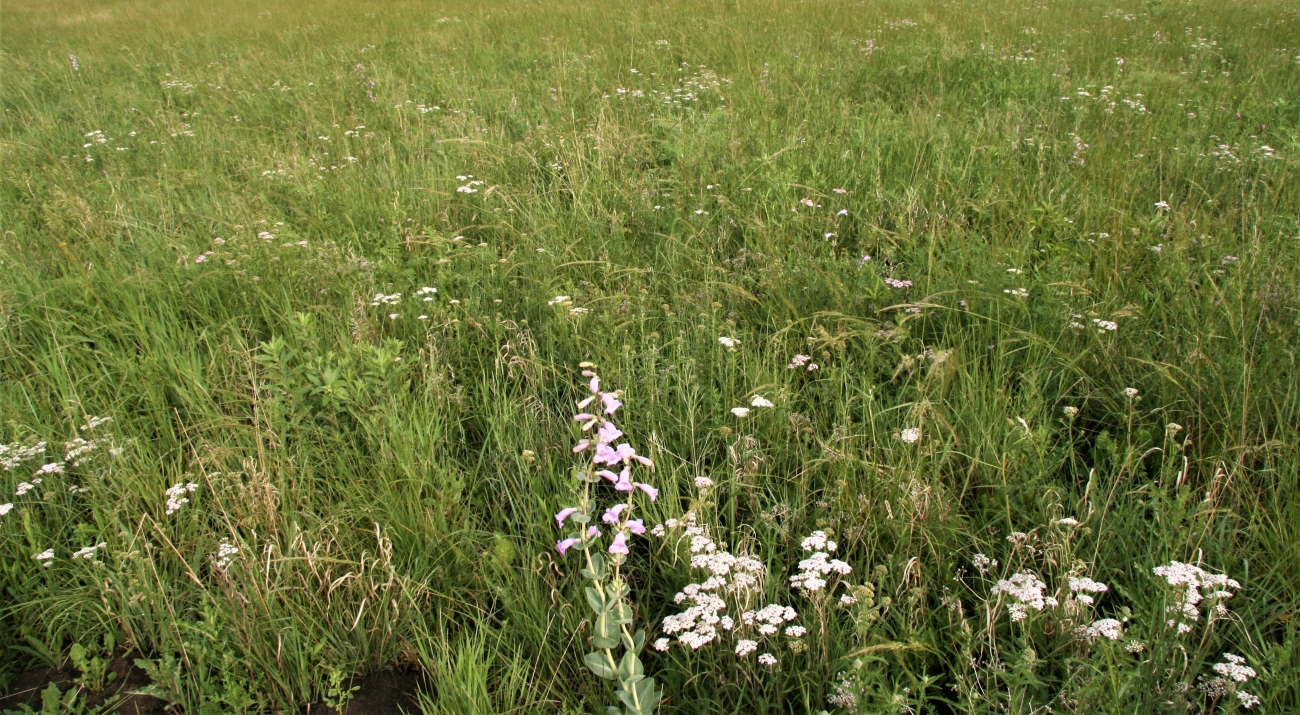
USFWS — illustrative Madison Wetland Management District, North Dakota prairie, NOT a nitrogen-enrichment study site · Public domain (USFWS) · Rights: Public domain

Nitrogen's benefit to nitrogen-fixing plants depends on which plants

A 121-experiment synthesis found a modest mean growth gain, enormous dispersion and a strong imprint of phylogeny.

Evidence
Peer-reviewed
Geography
Meta-analysis of 121 experiments, 76 N-fixing species
System
Nitrogen fixing, nutrient enrichment, plant biomass

WHAT THE EVIDENCE SAYS

Among 2,110 paired observations, nitrogen enrichment raised mean biomass 14.2%, but responses ranged from large losses to extreme gains. Intraspecific variability accounted for 26.9% and plant phylogeny 21.1% of response variation; experimental design and conditions also mattered.

WHY IT MATTERS / OUR READ

A mean response is not a fertilization prescription. Species, soil conditions and rate must come before scaling any expected effect to a working landscape.

CAVEATS / UNCERTAINTY

Experiments differ widely in duration, dose and controls; biomass is not a direct measure of biodiversity benefit or long-term nutrient-cycle recovery.

SOURCE

Nature Communications — Yao et al. (30 Oct 2026)
View original evidence ↗

Read the Wild Lands assessment

The US wind-turbine bat toll is an estimate measured in millions

A national model merging 499 monitoring reports estimates about 18.7 million bat fatalities across ten species from 1981–2024.

Evidence
Peer-reviewed
Geography
Contiguous United States, 1981–2024
System
Wind farms and migratory bat mortality

WHAT THE EVIDENCE SAYS

A multispecies Bayesian analysis synthesized 499 post-construction monitoring reports and estimated approximately 18.7 million fatalities across ten bat species, with strong effects for hoary, eastern red and silver-haired bats. Turbine design, land cover and proximity to rivers were associated with species-specific modeled risk.

WHY IT MATTERS / OUR READ

Facility footprint tells little about collision exposure beyond the pad. Species-specific siting, operating rules and consistent post-construction monitoring remain important.

CAVEATS / UNCERTAINTY

Millions are estimated deaths, not observed carcasses; extrapolation and detection errors matter, and fatalities are not equivalent to quantified population decline.

SOURCE

PNAS — Labuzzetta et al. (26 Oct 2026)
View original evidence ↗

Read the Wild Lands assessment

Boreal forest succession changes which neighbors help diversity persist

Twenty-five years after fire, demographic density effects shifted differently for recruitment, survival and growth.

Evidence
Peer-reviewed
Geography
148 post-fire plots, Manitoba, Canada
System
Boreal forest, fire succession, density dependence

WHAT THE EVIDENCE SAYS

Twenty-five years of records from 148 plots showed richness rising with stand age. Plot-level conspecific negative density dependence did not change significantly with age for recruitment or survival, but growth shifted from destabilizing to stabilizing. Rare species experienced stronger recruitment and growth effects.

WHY IT MATTERS / OUR READ

A regeneration census, survival record and canopy growth series are not interchangeable measures of recovery after disturbance.

CAVEATS / UNCERTAINTY

Observational density effects are not proof of a management treatment; outcomes differ by species abundance and demographic stage.

SOURCE

Nature Communications — Zhu et al. (30 Oct 2026)
View original evidence ↗

Read the Wild Lands assessment

A bat virome's geography tells more than its menu

In global RNA-virus libraries, bat ancestry and sampling location outweighed broad diet as predictors of viral community structure.

Evidence
Peer-reviewed
Geography
1,627 libraries, 78 bat species, 13 countries
System
Wildlife viromes, host phylogeny and One Health

WHAT THE EVIDENCE SAYS

A synthesis identified 309,546 viral operational taxonomic units, 82.74% unclassified. Feeding guild was associated with some community differences, but phylogeny and sampling locality explained substantially more variation; shared diet was a weaker predictor of viral sharing.

WHY IT MATTERS / OUR READ

Surveillance design needs place, host history and consistent sampling, not only an animal's feeding category.

CAVEATS / UNCERTAINTY

Sequence detection does not demonstrate viable infection, spillover or disease; virome-library coverage is uneven and much of the taxonomy remains unresolved.

SOURCE

Nature Communications — Huang et al. (30 Oct 2026)
View original evidence ↗

Read the Wild Lands assessment

Global Radar

A wider field of view.

  1. European trees are uncoupling fruit ripening from autumn color

    The link between successive phenological events changed across decades of European tree records.

    Evidence
    Peer-reviewed
    Geography
    Major European tree records, 1980–2017
    System
    Tree phenology and seasonal climate models

    WHAT THE EVIDENCE SAYS

    Sequential phenological stages were strongly associated, but the correlation between fruit ripening and autumn leaf coloration weakened significantly over time as that interval lengthened.

    WHY IT MATTERS / OUR READ

    Forecasting each seasonal phase as a separate climate response can miss changes in the relationships among phases.

    CAVEATS / UNCERTAINTY

    The result is observational and Europe-specific; it does not isolate one causal climate driver or prove all tree species respond alike.

    SOURCE

    Nature Communications — Zhang et al. (30 Oct 2026)
    View original evidence ↗

    Read the Wild Lands assessment
  2. Coastal black-carbon budgets need a groundwater pathway

    Wet-season measurements in China's Beibu Gulf show rivers dominate dissolved black-carbon transport, while non-riverine routes add a measurable fraction.

    Evidence
    Peer-reviewed
    Geography
    Northern Beibu Gulf, China
    System
    River-ocean carbon pathways and submarine groundwater

    WHAT THE EVIDENCE SAYS

    Seasonal coastal observations and salinity mixing analysis estimated approximately 8.0 tonnes/day dissolved black-carbon input from rivers and 1.7 tonnes/day from non-riverine sources in the wet season, attributed primarily to submarine groundwater discharge.

    WHY IT MATTERS / OUR READ

    Coastal budgets that stop at mapped river mouths may miss material pathways beneath shorelines.

    CAVEATS / UNCERTAINTY

    Concentrations and fluxes rely on reconstructed endmembers; non-riverine inputs are not experimentally isolated to groundwater alone.

    SOURCE

    JGR Oceans — Zhang et al. (29 Oct 2026)
    View original evidence ↗

    Read the Wild Lands assessment
  3. Good satellite water-quality accuracy can hide poor geographic transfer

    A review of 127 inland-water studies reports promising machine-learning fits but serious geographic and variable gaps.

    Evidence
    Peer-reviewed
    Geography
    Global synthesis, studies through June 2025
    System
    Satellite water quality, remote sensing and model transfer

    WHAT THE EVIDENCE SAYS

    A PRISMA review of 127 studies found high reported accuracies for some models, with CNN methods averaging R² near 0.85. Studies concentrated in China and the United States; chlorophyll was well represented, whereas CDOM and Secchi-depth retrieval were less developed.

    WHY IT MATTERS / OUR READ

    A strong published R² is not a substitute for independent local validation in an unfamiliar water body.

    CAVEATS / UNCERTAINTY

    Heterogeneous study validation protocols limit comparisons, and an average performance measure is not proof of global operational reliability.

    SOURCE

    Remote Sensing in Earth Systems Sciences — Rathupetsane et al. (29 Oct 2026)
    View original evidence ↗

    Read the Wild Lands assessment
  4. Biochar's carbon signal depended on halophyte litter

    A 370-day saline-soil microcosm performed differently when biochar was mixed with native plant litter rather than applied alone.

    Evidence
    Peer-reviewed
    Geography
    Yellow River Delta saline soil, China; 370-day microcosm
    System
    Biochar, coastal soils and microbial necromass

    WHAT THE EVIDENCE SAYS

    Pairing corn-straw biochar with Suaeda salsa litter increased microbial necromass carbon by about 25–54% relative to litter alone and altered lignin and bacterial necromass indicators.

    WHY IT MATTERS / OUR READ

    The surrounding plant-input system can change a soil amendment's outcome; the carbon fraction measured matters.

    CAVEATS / UNCERTAINTY

    This is a microcosm, not a field management trial. Carbon fractions and stability signals do not demonstrate net or permanent soil carbon sequestration.

    SOURCE

    Biochar — Luo et al. (29 Oct 2026)
    View original evidence ↗

    Read the Wild Lands assessment
  5. Park residents see tourism as an option, not always a skill they possess

    Wildlife-related livelihood threats were associated with willingness to try tourism, but not with confidence in entering it.

    Evidence
    Peer-reviewed
    Geography
    513 respondents near Wuyishan National Park, China
    System
    Human-wildlife conflict and protected-area livelihoods

    WHAT THE EVIDENCE SAYS

    Survey modeling found greater reported wildlife damage correlated with livelihood threat and intentions to diversify toward tourism. Threat was associated with perceived tourism usefulness but had no clear association with tourism self-efficacy.

    WHY IT MATTERS / OUR READ

    Creating an alternative livelihood opportunity and equipping local residents to use it are separate governance tasks.

    CAVEATS / UNCERTAINTY

    Cross-sectional survey intentions do not demonstrate real occupational transitions or causal effects of wildlife damage.

    SOURCE

    Frontiers in Ecology and Evolution — Zheng et al. (30 Oct 2026)
    View original evidence ↗

    Read the Wild Lands assessment
  6. Morocco's quinoa fertilizer gains met an emissions tradeoff

    Field trials and modeled lifecycle impacts found diminishing grain-yield returns above a nitrogen threshold.

    Evidence
    Peer-reviewed
    Geography
    Two multi-year quinoa field experiments, Morocco
    System
    Dryland crops, fertilizer inputs and carbon footprint

    WHAT THE EVIDENCE SAYS

    In one field treatment, mineral nitrogen above 40 kg/ha did not significantly improve quinoa grain yield, while modeled warming potential per hectare and kilogram of output rose. Organic amendment treatments likewise showed diminishing yield gains.

    WHY IT MATTERS / OUR READ

    Agronomic optimization must compare marginal yield against the full cost of inputs rather than assume more fertilizer always helps.

    CAVEATS / UNCERTAINTY

    Lifecycle burdens used emissions factors and site-specific agronomy; these are not direct farm greenhouse-gas flux measurements or universal rate guidance.

    SOURCE

    Frontiers in Sustainable Food Systems — Taaime et al. (30 Oct 2026)
    View original evidence ↗

    Read the Wild Lands assessment
  7. What counts as an Amazonian dominant tree depends on the metric

    A 140-plot western Amazon analysis shows local abundance and spatial prevalence identify partly different dominant species.

    Evidence
    Peer-reviewed
    Geography
    140 terra-firme forest plots, western Amazon basin
    System
    Tropical forest dominance and biodiversity metrics

    WHAT THE EVIDENCE SAYS

    An accepted peer-reviewed analysis compared abundance, F index, importance value index and h index. F index emphasized widely distributed species; IVI shifted rankings through basal area, and h index classified more narrow-distribution species as dominant.

    WHY IT MATTERS / OUR READ

    Managers should define dominance according to a decision's purpose: abundance, biomass or geographic prevalence.

    CAVEATS / UNCERTAINTY

    Metric-dependent differences are not evidence that one index fits every ecosystem. Peer-reviewed accepted record is not yet final formatted.

    SOURCE

    Frontiers in Ecology and Evolution — Matas-Granados et al. (accepted 30 Oct 2026)
    View original evidence ↗

    Read the Wild Lands assessment
  8. Pacific reef imagery offers more than a one-number cover estimate

    An updated NOAA catalog documents stratified structure-from-motion coral-reef transects across US Pacific island waters.

    Evidence
    Government data
    Geography
    Hawaiian, Mariana, American Samoa and US Pacific remote islands
    System
    Coral reefs, benthic imaging and monitoring

    WHAT THE EVIDENCE SAYS

    NOAA's Pacific Islands Fisheries Science Center describes recurring structure-from-motion image sampling at stratified random reef sites since 2019, recording colony life stage, size, morphology, disease and partial mortality.

    WHY IT MATTERS / OUR READ

    Comparable imagery can preserve evidence of habitat changes not apparent from a single coral-cover score.

    CAVEATS / UNCERTAINTY

    A metadata update is not evidence of ecological recovery; sampling strata, depth limits and site-level uncertainties remain.

    SOURCE

    NOAA Fisheries Pacific Islands Science Center — InPort dataset updated 21 Oct 2026
    View original evidence ↗

    Read the Wild Lands assessment
  9. Forest soil-carbon comparison measured concentrations, not stored tonnes

    An Anhui forest study found higher organic carbon concentration in mature native forest than in farmland or a pine monoculture.

    Evidence
    Peer-reviewed
    Geography
    Dabie Mountains, Anhui, China
    System
    Forest soil restoration and microbial processes

    WHAT THE EVIDENCE SAYS

    In a land-cover comparison, SOC concentrations were 18.26 g/kg in farmland, 42.81 g/kg in mature forest and 23.84 g/kg in a Pinus massoniana plantation. Root nutrient indicators and microbial enzyme activity were correlated with the differences.

    WHY IT MATTERS / OUR READ

    Canopy establishment alone does not measure soil recovery; biogeochemical processes and land history matter.

    CAVEATS / UNCERTAINTY

    Nonrandomized site comparison cannot establish restoration causation or quantify total soil carbon stocks or sequestration rates. Accepted manuscript, not final formatted.

    SOURCE

    Frontiers in Plant Science — Gao et al. (accepted 30 Oct 2026)
    View original evidence ↗

    Read the Wild Lands assessment
  10. Wildlife-trade image recognition can triage, not convict

    A prototype detector performed strongly on images of elephant, pangolin and tiger products, but enforcement effectiveness was not tested.

    Evidence
    Peer-reviewed
    Geography
    39,941 online, seizure and market images; three species
    System
    Wildlife trade monitoring and machine-learning classification

    WHAT THE EVIDENCE SAYS

    The best multispecies image detector achieved 84.2% accuracy in development tests; its smartphone prototype achieved 91.3% on an independent image test. Recognition was weaker for elephant-derived products than pangolin or tiger.

    WHY IT MATTERS / OUR READ

    Image triage could focus human review, but real deployment requires precision, false-positive audits and legal safeguards.

    CAVEATS / UNCERTAINTY

    Image-benchmark accuracy is not evidence of successful detection in unfiltered marketplaces or reductions in trafficking.

    SOURCE

    Conservation Biology — Kulkarni et al. (26 Oct 2026)
    View original evidence ↗

    Read the Wild Lands assessment

Landscape / City Watch

Cities are ecological systems.

Budapest's ponds point to local ecology more than urban density

Mosquito abundance in 93 ponds was more strongly associated with fish presence than surrounding urbanization.

Evidence
Peer-reviewed
Geography
93 garden and other urban ponds, Budapest, Hungary
System
Urban pond communities, mosquitoes and fish

WHAT THE EVIDENCE SAYS

Using net surveys and eDNA, researchers sampled 40 garden and 53 other ponds. Only two had invasive Aedes koreicus. Fish presence correlated negatively with mosquito occurrence and abundance; urbanization was not a major explanatory variable.

WHY IT MATTERS / OUR READ

Pond design and food-web composition can matter more than the city's average built-cover measure.

CAVEATS / UNCERTAINTY

Observational fish association is not a blanket recommendation to stock urban ponds; introduced fish can harm amphibians and invertebrates. Detection does not imply disease transmission.

SOURCE

Urban Ecosystems — Tornero et al. (30 Oct 2026)
View original evidence ↗

Read the Wild Lands assessment

November 1, 2026 · Issue 047

The recurring lesson today is that averages and footprints can hide essential mechanisms. Nitrogen enrichment increased fixing-plant biomass on average, yet responses diverged sharply by species and experiment. A national wind-energy synthesis reconstructed millions of bat fatalities beyond the turbine pad. Post-fire forest recovery depended on whether researchers measured recruitment, survival or growth, while geography and ancestry explained bat viromes better than feeding category. These results point to a common editorial question: what, precisely, was measured?

Land Manager Watch

Evidence for decisions on land, water and habitat

Peer-reviewed · Four Rhode Island restoration projects monitored up to eight years

Raising marsh elevation worked faster than rebuilding sparrow habitat

Across four Rhode Island marsh-restoration sites, sediment placement raised elevation while vegetation and wildlife recovered unevenly.

Management read

Management read: measure drainage, salinity, plant community structure, nest placement and bird responses separately across multiple breeding seasons. Sediment addition starts a restoration trajectory rather than finishing one.

Caveat / uncertainty: Modeled 24–111 years of extra marsh lifespan is a projection, not observed endurance. Nesting alone does not prove reproductive success, and Rhode Island outcomes may not transfer across coasts.

Read the full evidence, caveats & Land Manager analysis →

Editorial thread to watch

The rest of the evidence follows that thread. Groundwater complicates coastal carbon budgets; satellite water-quality accuracy may not travel between regions; restoring digging mammals did not yet produce a detectable soil-fungal response. In Rhode Island, marsh elevation rose before high-marsh vegetation and nesting structure reliably returned. These distinctions separate an intervention, an indicator and the ecological function we actually hope to recover.